

2026 Orientation Workshop on Pregnant Women’s Class Facilitation Techniques for Pandeglang District Health Office Facilitators
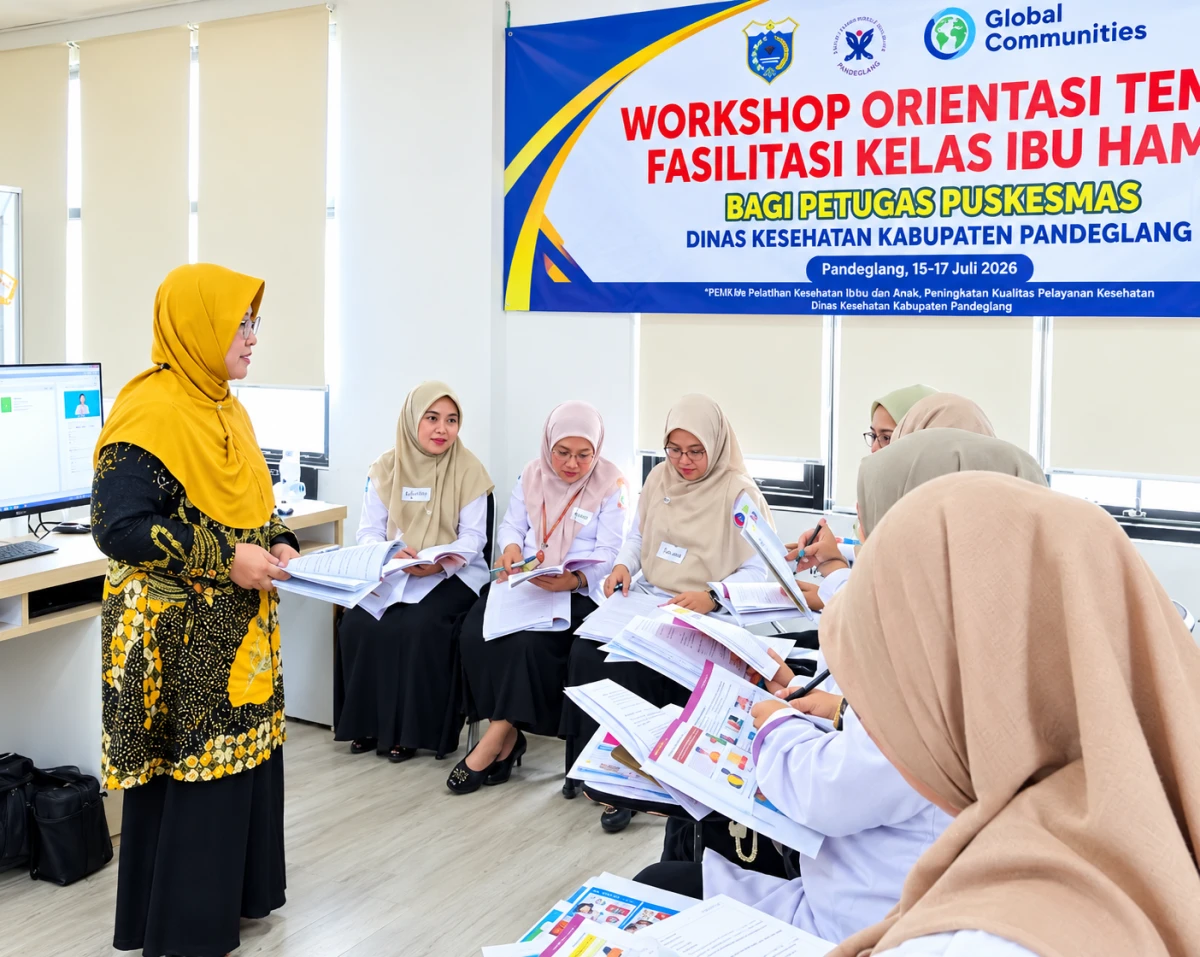
In an effort to strengthen the quality of maternal and child health services in Pandeglang District, the Pandeglang District Health Office, in collaboration with Yayasan Pembangunan Citra Insan Indonesia (YPCII) and Global Community through the Continuum of Family Care (CoFC) Program, conducted an Orientation Workshop on Pregnant Women’s Class Facilitation Techniques for facilitators.
The three-day workshop was held from 15–17 July 2026 at the Pandeglang District Health Office Hall. The activity was attended by 19 midwives from 19 selected Community Health Centers (Puskesmas). The participants were prepared to serve as competent facilitators who could implement and further develop Pregnant Women’s Classes within their respective working areas.
The Pregnant Women’s Class is an important initiative to improve the knowledge and preparedness of pregnant women and their families in facing pregnancy, childbirth, the postpartum period, and newborn care. Through these classes, pregnant women not only receive essential health information but are also encouraged to actively understand their pregnancy, recognize danger signs, meet their nutritional needs, and prepare for a safe delivery.
The workshop began with an opening session led by the Pandeglang District Health Office, followed by a session on Interpersonal Communication (IPC) in Pregnant Women’s Classes. This topic provided participants with a foundation for developing effective communication skills, creating a comfortable learning environment, and encouraging pregnant women to actively participate in discussions and share their experiences and concerns.
Participants then received core materials on Pregnant Women’s Classes, covering pregnancy care and monitoring to ensure the health of mothers and fetuses; safe childbirth and a comfortable postpartum period for healthy mothers and babies; prevention of diseases and complications during pregnancy, childbirth, and the postpartum period; and newborn care to support optimal growth and development. Participants also learned about physical activity during Pregnant Women’s Classes and practiced food portioning, equipping facilitators with practical skills to deliver nutrition education in a more engaging, concrete, and easily understandable way for pregnant women.
On the second day, participants received further guidance on the Technical Guidelines for Implementing Pregnant Women’s Classes, including the use of implementation and monitoring forms. Participants then prepared for a micro-teaching session as an opportunity to practice the facilitation techniques they had learned. The day continued with the development of Follow-Up Action Plans (RTL) to ensure that Pregnant Women’s Classes could be implemented continuously and sustainably in each sub-district and Puskesmas.
As an important component of the workshop, on the third day participants took part in a hands-on practice session facilitating Pregnant Women’s Classes. Participants were divided into four groups, with each group facilitating a session for five pregnant women. A total of 20 pregnant women participated in the practical session, consisting of 10 pregnant women from Saruni Urban Village, Majasari Sub-district, as the practice site for Puskesmas Majasari, and 10 pregnant women from Cikupa Sub-district as the practice site facilitated by the Pandeglang District Health Office.
The field practice provided participants with an opportunity to directly apply the skills they had acquired throughout the orientation. These included opening the session, establishing effective communication with participants, delivering educational materials, encouraging discussion among pregnant women, using the KIA Handbook (Maternal and Child Health Handbook) as a learning tool, and providing nutrition education and food portioning demonstrations. Following the practice session, facilitators provided feedback and facilitated a discussion as part of the evaluation process to help participants strengthen their skills in conducting Pregnant Women’s Classes.
This workshop was part of a broader collaborative effort to strengthen the capacity of health workers so that Pregnant Women’s Classes are not limited to the delivery of information, but also create a learning process that is interactive, communicative, participatory, and responsive to the needs of pregnant women.
Through the partnership between the Pandeglang District Health Office, YPCII, and Global Community under the Continuum of Family Care (CoFC) Program, it is expected that the participating midwives will become competent facilitators capable of applying the knowledge and skills gained through the orientation in their respective working areas. In turn, Pregnant Women’s Classes can be implemented sustainably and contribute to improving the knowledge and preparedness of pregnant women and their families, promoting maternal and newborn health, and strengthening efforts to prevent complications and nutritional problems from pregnancy through the First 1,000 Days of Life (1,000 HPK).
Subscribe
Get the latest news and updates from YPCII directly to your inbox.